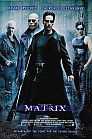
The Matrix
The Matrix (1999) is a groundbreaking sci-fi action film that follows computer programmer Thomas Anderson, alias Neo, as he learns the world is a simulated prison controlled by machines, joining rebels to fight for humanity’s freedom. Its dense, philosophical dialogue—grappling with reality, consciousness, and prophecy—makes it an excellent choice for advanced English learners who want to challenge their listening comprehension. On SaveWordly, this film contains 461 vocabulary entries, with a dominant CEFR level of B2 (55% of words), but the overall difficulty is C1 due to abstract and metaphorical language (15% C1, 1% C2). The vocabulary distribution includes 32 A2 words (7%), 102 B1 words (22%), and 68 C1 words, ensuring a gradual progression for learners. With SaveWordly, you can save unfamiliar words directly from the movie’s subtitles, review them with interactive flashcards, and then practice speaking with an AI tutor that simulates conversations with characters like Morpheus or Neo. This immersive approach transforms passive viewing into active language acquisition, reinforcing both vocabulary retention and spoken fluency. Best suited for upper-intermediate to advanced learners (B2–C1) who enjoy deep, thought-provoking content.
How SaveWordly Works
Browse the vocabulary list and save words you don't know to your personal list.
Learn the words before watching — so nothing interrupts you while enjoying the show.
After watching, practice speaking about what you saw with our AI conversation tutor.

Why "The Matrix" for English learning — in English
If you are asking, "Why should I learn English with 'The Matrix'?", the answer lies in its dense, natural dialogue and iconic cultural impact. The 1999 sci‑fi action film is packed with conversations that range from casual banter to deep philosophical discussions. Characters like Neo, Morpheus, and Trinity speak in clear, deliberate English, making it easy to follow even during action scenes. The movie's slang ("red pill," "blue pill," "there is no spoon") has entered global pop culture, giving learners context‑rich phrases they will encounter in real‑world conversations. Plus, the plot is driven by questions about reality and choice—topics that naturally prompt you to discuss, debate, and think in English. For intermediate and upper‑intermediate learners, "The Matrix" offers the perfect balance of challenge and comprehension.
"The Matrix" Vocabulary Level — in English
Learners often wonder, "What is the vocabulary difficulty of 'The Matrix'?" According to a detailed CEFR analysis, the movie contains precisely 461 total vocabulary entries. The dominant level is B2 (upper‑intermediate), making up 55% of the vocabulary. Here is the full breakdown:
A1: 1 word (0%) – Only a single basic word. Practically no beginner‑level vocabulary.
A2: 32 words (7%) – Simple everyday terms, easily understood.
B1: 102 words (22%) – Lower‑intermediate words that build the foundation.
B2: 252 words (55%) – The core of the script. This is where you find abstract nouns (e.g., "reality," "choice," "system"), common phrasal verbs, and idiomatic expressions.
C1: 68 words (15%) – Advanced vocabulary (e.g., "simulation," "prophecy," "transcend") that challenges you.
C2: 6 words (1%) – Rare, expert‑level terms (e.g., "sophistry," "apotheosis") that occur only a few times.
What does this mean for you? If your English is at B1 level or higher, you will be able to understand the majority of dialogue without getting lost. The large B2 pool ensures you are exposed to the kind of academic, professional, and casual language you need for real‑world fluency. The few C1/C2 words act as "stretch goals"—they won't block comprehension but will push your vocabulary higher.
English Style in "The Matrix" — in English
Another common learner question: "What kind of English will I learn from 'The Matrix'?" Let’s break it down:
Accent: Predominantly Standard American English, spoken clearly by the main cast. Keanu Reeves, Laurence Fishburne, and Carrie‑Anne Moss all use a neutral US accent, which is ideal for international learners. Agent Smith’s British‑inflected speech adds a useful contrast.
Register: The film shifts smoothly between formal (Morpheus explaining the Matrix) and informal (Cypher’s cynical lines, Neo’s frustration). You will hear slang from the 1990s, like "dude," "cool," and "jacked in." Some of the slang is dated, but understanding it helps with older media and conversations with native speakers over 30.
Phrasal verbs: These appear frequently—"wake up," "break out," "plug in," "shut down," "figure out." Learning them in context makes them stick.
Idioms: Classic English idioms are scattered throughout: "ignorance is bliss," "there’s a difference between knowing the path and walking the path," "I can only show you the door."
Pace: Dialogue is often measured and deliberate, especially during training scenes. Action sequences have shorter, punchier lines, training your ear for real‑time spoken English.
In short, you will absorb a versatile, mid‑to‑high register of American English that works in both casual and professional settings.
SaveWordly + "The Matrix" — in English
You might be thinking, "How can I turn watching 'The Matrix' into actual vocabulary building?" That’s where SaveWordly fits in. Use it as your companion tool while you watch:
Before watching: Open SaveWordly on your phone or tablet. As you listen, tap any unfamiliar word or phrase to save it instantly. For "The Matrix," you will likely save terms like "simulate," "prophecy," "neural," "residual self‑image."
After each scene or episode: Review your saved words with SaveWordly’s built‑in flashcard system. The app uses spaced repetition, so you see vocabulary just before you forget it. Because the words come directly from the movie, you always have a memorable scene to anchor them.
AI speaking practice: SaveWordly’s AI can generate conversation prompts based on your saved words. For example, after saving "red pill" and "illusion," the AI might ask, "Do you think the red pill represents a risk worth taking in your own life?" You then speak your answer aloud, improving pronunciation and fluency. This turns passive viewing into active language production.
The tool is not a gimmick—it’s a structured way to capture the richness of "The Matrix" and retain it long after the credits roll.
What Level After Finishing "The Matrix"? — in English
The final question: "If I study 'The Matrix' thoroughly, what English level can I reach?" Based on the CEFR data, here is a concrete outcome:
A learner who starts at solid B1 (already understanding 102 B1 words and many A1/A2 words) and actively works through the film’s vocabulary can expect to consolidate a strong B2 level. You will have internalized 252 B2 words, which is the core of upper‑intermediate fluency. Plus, the 68 C1 words you encounter will push you into advanced territory. By the time you finish, you will be able to understand about 97% of the movie’s unique vocabulary (all words from A1 to C1 combined). The remaining 6 C2 words are rare enough that missing them won’t hinder comprehension.
If you are already at B2, studying "The Matrix" with SaveWordly can help you break into C1. The film’s philosophical dialogues and technical jargon (e.g., "ship systems," "cipher text") will expose you to the kind of abstract vocabulary that distinguishes high‑level users. In practical terms, after a focused study of this movie, you will be more comfortable in academic discussions, workplace meetings, and even debates about technology or society—all in English.
Take it one scene at a time. The Matrix is not just a movie; it’s a ready‑made curriculum for lifting your English to the next level.
Top Words